
SPAIN AUTHOR · FICTION · GENERAL
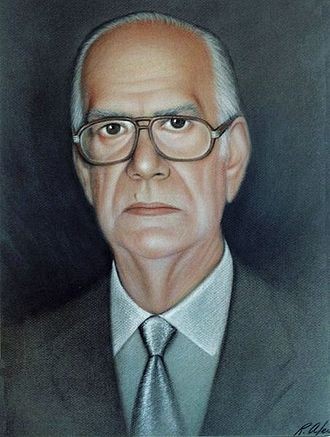
Camilo José Cela
Also known as: Camilo José Cela y Trulock, Camilo Jose Cela
Camilo José Cela y Trulock (Iria Flavia, Padrón, La Coruña, 11 de mayo de 1916-Madrid, 17 de enero de 2002) fue un escritor español. Autor prolífico y representante de la literatura de posguerra, ejerció como novelista, periodista, ensayista, editor de revistas literarias y conferenciante. Fue académico de la Real Academia Española y resultó galardonado, entre otros, con el Premio Príncipe de Asturias de las Letras en 1987, el Premio Nobel de Literatura en 1989 y el Premio Cervantes en 1995. Por sus méritos literarios, en 1996 el rey Juan Carlos I le otorgó el marquesado de Iria Flavia, creado ex profeso. Entre sus novelas sobresalen especialmente La familia de Pascual Duarte (1942) y La colmena (1951), Destacan asimismo Mrs Caldwell habla con su hijo (1953), San Camilo, 1936 (1969), Oficio de tinieblas (1973), Mazurca para dos muertos (1983) o Madera de boj (1999).
It is possible, some days, to see the whole of Barcelona with your feet on the ground.
— from Barcelona
Most acclaimed

The hive
A coalition of Earth’s nations barely fought off the Formics’ first scout ship. Now it’s clear that there’s a mother-ship out on edge of the system, and the aliens are prepared to take Earth by force. Can Earth’s warring nations and corporations put aside their differences and mount an effective defense?
Boxwood
"Boxwood, which can perhaps best be described as a non-novel, has none of the structural signposts readers generally expect: there is no plot, no crux, no denouement. Instead we have a mix of folklore, tradition, superstition, autobiographical snatches, cooking directions, a litany of nautical disasters on the Coast of Death - ships from afar with cargoes of oranges, typewriters, iron ore, oil, spices - elements of nature both cruel and beautiful, of man both saint and sinner, whales, witches, mermaids, ghosts, the exquisite, the crass, all against the background of Cela's birthplace, Galicia."--BOOK JACKET.
Obra completa
1996
Don Juan (Spanish: [doŋ ˈxwan]), also known as Don Giovanni (Italian), is a legendary fictional Spanish libertine who devotes his life to seducing women. The original version of the story of Don Juan appears in the 1630 play El burlador de Sevilla y convidado de piedra (The Trickster of Seville and the Stone Guest) by Tirso de Molina. The play includes most of the elements found and later adapted in subsequent works, including the setting (Seville), the characters (Don Juan, his servant, his love interest, and her father, whom he kills), moralistic themes (honor, violence and seduction, vice and retribution), and the dramatic ending in which Don Juan dines with and is then dragged down to hell by the stone statue of the father he had previously slain. Tirso de Molina's play was subsequently adapted into numerous plays and poems, of which the most famous include a 1665 play, Dom Juan, by Molière; a 1787 opera, Don Giovanni, with music by Mozart and a libretto by Lorenzo da Ponte largely adapting Tirso de Molina's play; a satirical and epic poem, Don Juan, by Lord Byron; and Don Juan Tenorio, a romantic play by José Zorrilla. By linguistic extension, from the name of the character, "Don Juan" has become a generic expression for a womanizer, and stemming from this, Don Juanism is a non-clinical psychiatric descriptor.