
HISTORY · BIOGRAPHY
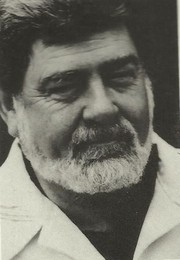
Byron Farwell
Byron Edgar Farwell (20 June 1921 in Manchester, Iowa – 3 August 1999 in Purcellville, Virginia) was an American military historian and biographer. Farwell graduated from Ohio State University and the University of Chicago (M.A., 1968). He served in World War II as a captain of engineers attached to the Mediterranean Allied Air Force in the British Eighth Army area and later also saw combat in the Korean War. He separated from the military after seven years of active duty. As a civilian, he became director of public relations and director of administration for Chrysler International from 1959 to 1971. He also served three terms as mayor of Hillsboro, Virginia (1977–81). He published articles in The New York Times, The Washington Post, American Heritage, Harper's, Horizon, Smithsonian Magazine as well as serving as a contributing editor to Military History, World War II, and Collier's Encyclopedia. Farwell also published biographies of Stonewall Jackson, Henry M. Stanley, and Sir Richard Francis Burton. He was a fellow of the MacDowell Colony and a member of both the Royal Geographical Society and the Royal Society of Literature.
Colonel George Gough and his wife, Letitia, were disappointed when, on 23 November 1779, Mrs Gough gave birth to a son, for they already had three and this time had hoped for a girl.
— from Eminent Victorian Soldiers
Most acclaimed

Prisoners of the Mahdi
1967
In the Sudan less than one hundred years ago, spears triumphed over Remington rifles and even machine guns, at least for a while."" This is the story of a native uprising, led by a man born Mohammed Ahmed but known as El Mahdi, the messiah, who seized the Sudan from the English. El Mahdi, with his twin program of hating the foreigner and pursuing ""the Way,"" united the Sudanese and created the first independent African nation. Author Farwell follows his rise, charts the English moves against him suspended when Gordon fell at Khartoum. The Mahdi dead, the Khalifa Abdullahi ruled during the long hiatus which found three Europeans in extraordinary duress as prisoners: Rudolf Slatin, a soldier, who became the Khalifa's personal slave; Joseph Orwalder, a priest; and Charles Neufeld, a merchant whose defiance kept him in chains for ten years. Their experiences form the main section of the book and a final one deals with the reconquest of the Sudan under Kitchener, while an epilogue covers its government up to today under the rule of the Mahdi's grandson... Regardless of Mr. Farwell's disclaimer of the characteristic ""vagueness"" of the Sudan and its history, there is nothing vague about his command of military fact and of character--his portrait of Gordon is incisive... Another superior job by the author of The Man Who Presumed and Burton.
Eminent Victorian Soldiers
Vigorous military history of Victoria's reign (1837-1901) during which no year passed without British soldiers dying on some field. For the eight generals whose lives are recounted--Hugh Gough, Charles Napier, Charles Gordon, Frederick Roberts, Garnet Wolseley, Evelyn Wood, Hector Macdonald and Herbert Kitchener--war's glory was beyond poetry, ""life's greatest experience, barring a honeymoon."" Farwell's life of Gough (1779-1869) is typical. Gough began soldiering at 12, became a field officer (major) by 25, was soon a brevet-colonel, and at 37 when the Napoleonic wars ended was disbanded at half pay. While acting as a judge in Ireland, he rose to major general, and at advanced age returned to active duty to fight 16 more battles, become commander-in-chief in India (his favored tactic, not popular with fellow officers, was the bayonet charge), to be lavished and garnished with honors and knighthoods, almost until his dying day at 90. Charles Gordon (1833-1886) neurotically lusted for honors, enjoyed brandy, cigars and naked boys (and detested the bare Egyptian dancing gifts offered for his delectation). Farwell throws away Lytton Strachey's famous alternate death scenes (in Eminent Victorians) with ""Gordon was killed--accounts vary exactly how. . ."" and does not even tell us that Gordon's severed head was stoned by the Mahdi's troops. Garnet Wolseley's account of this first action (at 20), a charge on foot against Myat Teen's fortified Burmese stronghold, stands for all these glory-maddened Queen's officers: ""What a supremely delightful moment it was! . . . for the moment your whole existence, soul and body, seems to revel in a true sense of glory. . . The blood seems to boil, the brain to be on fire. Oh! that I could again hope to experience such sensations!"" The reverse: Kitchener's insane ferocity in sending assault after suicide assault against the Boers when no good result was possible. Farwelrs retellings are clean and unaffected, more like busts than monuments, and the living men step forth, noble, driven.