
UNITED STATES AUTHOR · POLITICS AND GOVERNMENT · FICTION
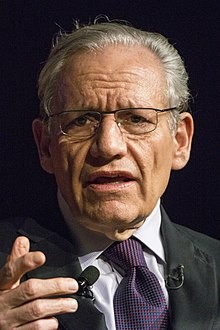
Bob Woodward
Also known as: Robert Upshur Woodward, B. Woodward
Bob Woodward is a special education teacher.
1 - JUNE 17, 1972. Nine O'Clock Saturday morning. Early for the telephone. Woodward fumbled for the receiver and snapped awake...
— from All the President's Men, 1974
Most acclaimed

The agenda
Working behind the scenes for the eighteen months following Bill Clinton's election, conducting hundreds of interviews with administration insiders and other key officials, and gaining access to confidential internal memos, diaries, and meeting notes, Bob Woodward has discovered how the Clinton White House really works. Clinton's pledge for a new economic deal was the cornerstone of his 1992 campaign, and fulfilling it has been his central ambition and enterprise as president. By focusing on Clinton's efforts to pass a comprehensive economic recovery plan, Woodward takes us not only to the highest level meetings, the hard=fought debates, and the most difficult decisions but also to the very heart of this presidency-and of this man. With its day-by-day, often minute-by-minute account, it is one of the most intimate portraits of a sitting president ever published. President Clinton is shown as he debates, scolds, pleads, celebrates and rages in anger and frustration. What emerges also is a group portrait of Clinton's innermost circle of advisers in action-including his wife, Hillary; Vice President Al Gore; Treasury Secretary Lloyd Bentsen and the economic team; George Stephanopoulos and David Gergen and the White House staff, James Carville, Paul Begala, and the other outside political strategists; Congressional leaders; and Federal Reserve Chairman Alan Greenspan. Using his proven research method-returning time and again to key sources and relying on the paper trail of internal documentation-Woodward has assembled an extensive archive of the early Clinton presidency. This microscopic examination of the Clintons and this administration, working under pressure on the nation's most important task, reveals the deep and still unsettled conflicts among President Clinton's advisers and within himself. The questions about the federal deficit, health care, welfare reform, taxes, jobs, government spending, interest rates, the roles and responsibilities of the middle class, the wealthy, and the poor are of lasting importance. How they are being answered affects each person in the country.
All the President's Men
1974
Investigation and report of the burglary at the Watergate Hotel that culminated with President Richard Nixon's resignation from office.
The war within
The initial stages of B.D.'s recovery from losing a leg in Iraq were dramatically portrayed in The Long Road Home: One Step at a Time, but his healing journey was far from over. As this powerful sequel shows, the "war within" can be a long and lonely struggle, hardly the life of a "glamorous amputee" imagined by his daughter's jealous classmate. With his coaching job at Walden re-secured and the marathon PT sessions paying off, B.D.'s return to normalcy seems to be progressing well. But those who love him see alarming signs of trouble, namely anger and alcohol. First there's the punching of an MP. Then there's the daily breakfast of beer, a subject not open for discussion even with a best-intentioned friend like Mike Doonesbury. And "the screaming at night isn't very Christmassy," Boopsie notes. As B.D. admits to his doctor, "I'd rather sleep with my weapon than my wife! How messed up is that?" Messed up enough that our wounded warrior forces himself to begin circling the local Vet Center, where he is gently and skillfully reeled in by a remarkable counselor and fellow Vietnam Vet named Elias. Their sessions together form an extraordinary and moving chronicle of catharsis and coming-to-terms. The words "Welcome home, soldier," are powerful and transformative, and B.D. is fortunate in finally getting to a place where he can hear them.