
JUVENILE · SCIENCE
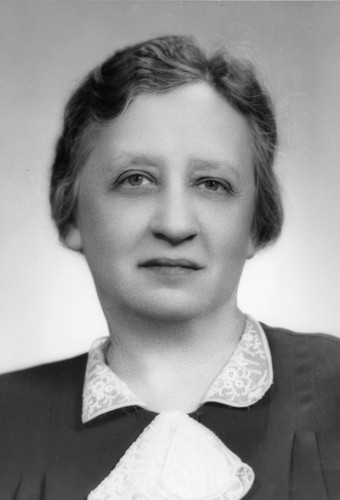
Bertha Morris Parker
Also known as: Bertha Morris Parker, Bertha M. Parker
Taught science at the Laboratory Schools at the University of Chicago from 1916 into the 1950s, and was research associate at the Chicago Natural History Museum, in addition to writing science books for children.
One spring day in 1804, when the great painter and naturalist John James Audubon was a teenager, he spied a pair of phoebes near his home in Pennsylvania.
— from Birds
Most acclaimed

Birds
The poems in Judith Wright's Birds volume have long been recognised as among the best-loved poems written in Australia. Many people have grown up with the beguiling rhythms of 'Black Cockatoos', or the jauntiness of 'The Wagtail'. Now, in this new edition, commemorating 25 years since the poems were last published as a single collection, these works appear with six additional poems and a personal introduction by the poet's daughter Meredith McKinney, for whom many of the poems were written. The poems are complemented by full-colour illustrations drawn from the National Library's Pictures Collection, featuring the work of artists such as John Lewin, Lionel Lindsay and Lilian Medland, and William T. Cooper and Betty Temple Watts. Birds is both a celebration of Judith Wright (1915-2000) as writer and passionate environmentalist, and of the centrality of birds in the poet's imagination.
Toys
Summary:Designed to address the Foundation Curriculum, the Early Learning Goals from the QCA and the Scottish Curriculum Framework 3-5. Written by authors who understand how children learn, this material is fun to use. It uses a spiral curriculum model, reinforcing and revisiting previous learning.
Light
1968
[Comment from Jon Courtenay Grimwood]: > Light is the kind of novel other writers read and think: "Why don't I just give up and go home?" That was certainly my first reaction on reading its mix of coldly perfect prose and attractively twisted insanity. It's also the only book to bring me unpleasantly close to sympathising with a serial killer. But this is M John Harrison: so antihero Michael Kearney is a mathematically brilliant, dice-throwing, reality-changing hyper-intelligent serial killer haunted by a horse-skulled personal demon. > Harrison's genius is to tie Kearney's narrative thread to those of Seria Mau – a far-future girl existing in harmony with White Cat, her spaceship, surfing a part of the galaxy known as the Kefahuchi Tract – and Chinese Ed, a sleazy if likeable cyberpunky chancer with a passion for virtual sex. > This is not a kind book, or even a particularly likeable book. But then I suspected it was never intended to be, and the author wouldn't want the kind of people who want to like characters as his readers anyway. What it is is stunningly written, meticulously plotted, hallucinogenically realised and brutally honest. No one who reads it could doubt that Harrison might win the Booker if he could be bothered. > Light is also the book that novelist and critic Adam Roberts was so sure would win the Arthur C Clarke award, he offered to change his name to Adam Van Hoogenroberts if it didn't. We're still waiting . . .