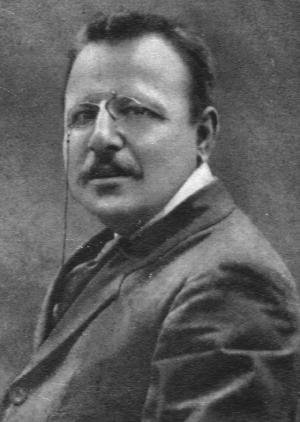
Benedetto Croce
Personal Information
Description
There is no description yet, we will add it soon.
Books
Materialismo storico ed economia marxistica
"First published in 1914." Bibliographical footnotes.
The conduct of life
Discusses the ultimate ethical and religious issues that confront modern man and offers a new orientation, directed to the renewal of life and the reintegration of modern civilization. -- Publisher's description.
Breviary of aesthetics
"Benedetto Croce (1866-1952) was among the most important philosophers of the twentieth century who grappled with issues of pure aesthetics. The series of lectures written in 1912 as the inaugural address of the Rice Institute in Texas and collected under the title Breviario di estetica (Breviary of Aesthetics) is undoubtedly Croce's definitive study of the arts, and the work remains foundational in the philosophy of aesthetics to this day. It has been translated into several languages and continues to attract a wide readership." "In this edition, the Breviary of Aesthetics is presented in a brand new English translation and accompanied by informative endnotes that discuss many of the philosophers, writers, and works cited by Croce in his original text. The new translation deliberately preserves the idiosyncratic use of language for which Croce was famous, and emphasizes his writing style, which, together with that of Galileo Galilei is considered to be among the most lucid in Italian literature. An introduction by Remo Bodei discusses the broader impact of the work and places it in historical context. In short, this edition reintroduces a seminal text on aesthetics to a new generation of English-speaking readers, and represents a significant contribution to the Lorenzo Da Ponte Italian Library series."--Jacket.
Estetica come scienza dell' espressione e linguistica generale
"Benedetto Croce is one of the most influential philosophers of the twentieth century. His work in aesthetics and historiography has been controversial, but enduring. When the first edition of Aesthetic appeared in 1902, Croce was seen as foremost in reasserting an idealistic philosophy, which, despite its source in continental idealists from Descartes to Hegel, offers a system that attempts to account for the emergence of scientific systems. Croce thus combines scientific and metaphysical thought into a dynamic aesthetic." "Croce regards aesthetics not merely as a branch of philosophy, but as a fundamental human activity. It is inseparable from historical, psychological, political, economic, and moral considerations, no less than a unique frame of artistic reference. Aesthetic is composed of two parts: Part One concentrates on aesthetic theory and practice. Among the topics it covers are: intuition and expression, art and philosophy, historicism and intellectualism, and beauty in nature and in art. Part Two is devoted to the history of aesthetics. Croce analyzes such subjects as: aesthetic ideas in the Middle Ages and Renaissance, Giambattista Vico's contribution to aesthetics, the philosophy of language, and aesthetic psychologism." "In his new introduction to a classic translation, John McCormick reviews Croce's impact in the fields of aesthetic theory and historiography. He notes that the republication of this work is an overdue appreciation of a singular effort to resolve the classic question of the philosophy of art: art for its own sake or art as a social enterprise. Both find a place in Croce's system."--Jacket.