Discover
Apr 10, 1901 — Dec 5, 1968· 67 yrs

UNITED KINGDOM OF GREAT BRITAIN AND IRELAND AUTHOR · FICTION · PSYCHOLOGICAL FICTION

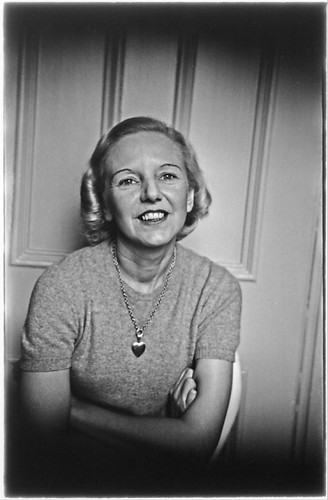
Anna Kavan

Also known as: Helen Emily Woods, Helen Ferguson

22
BOOKS
4.2
AVG RATING (10)
5
READERS

Anna Kavan was a British novelist, short story writer and painter. Originally publishing under her first married name, Helen Ferguson, she adopted the name Anna Kavan in 1939, not only as a nom de plume but as her legal identity. - Wikipedia

Cannes, United Kingdom of Great Britain and Ireland
Wikipedia

POOLE had begun to give an ironic inflection to the phrase "in my former life."

— from The Vintage Book of Amnesia

Most acclaimed

#1

A Stranger Still

1995

0.0 (0)

FROM THE BOOK JACKET: A Stranger Still was first published in 1935 under Anna Kavan’s early married name of Helen Ferguson. An intriguing, well-plotted story, it was much acclaimed at the time, and its freshness and vigour remain undiminished. The wealthy Lewison family occupy centre stage. William, a widower, presides forcefully over his empire of Greater London stores, as well as over his sons, Cedric and Martin, and his impressionable daughter, Gwenda. A fictional ‘Anna Kavan’ appears as a young girl adrift from her husband and now in pursuit of romantic fulfillment. The story takes us from fashionable and Bohemian London to Paris, the South of France and Italy. The autobiographical element is implicit for those familiar with the author’s enigmatic life. Anna Kavan captures the ambience of the thirties with conviction, yet her pre-hallucinogenic writing has the uninhibitedness and immediacy of a novel of today. (From the book jacket, british reprint published in 1995).
#2

Sleep Has His House

1973

3.5 (2)

Since her death in 1968, there has been a strong revival of interest in Anna Kavan's work. Sleep Has His House, combining autobiography with surrealist experimentation, deserves to rank with the author's best works. In her foreword Anna Kavan writes: 'Life is tension or the result of tension; without tension the creative impulse cannot exist. If human life be taken as the result of tension between the two polarities night and day, night, the negative pole, must share equal importance with the positive day. At night, under the influence of cosmic radiations quite different from those of the day, human affairs are apt to come to a crisis. At night most human beings die and are born. Sleep Has His House describes in the night-time language certain stages in the development of one individual human being. No interpretation is needed of this language we have all spoken in childhood and in our dreams; but for the sake of unity a few words before every section indicate the corresponding events of the day.' (From the book jacket, british reprint published in 1973).

#3

Goose Cross

1936

0.0 (0)

The background of Helen Ferguson's new novel is a small English village in which Thomas Spender and his wife Judith form the centre of a community of very varying characters. Adam Green, a young poet and writer, comes back from the East and is caught up in the web if Judith's dreamy and yet possessive personality. There are many other threads in the story which act and react upon the principal theme and are inextricably interwoven with it. Miss Ferguson handles her many characers with great skill and particularly uses the art of anti-climax with such a success that the event to which everything in the story leads up never actually takes place. (From the book jacket, first british edition published in 1936).

Books

Newest First
